
The Asian American Student Union at University of Florida
Established in 1993, the Asian American Student Union (AASU) serves to promote Asian and Asian American awareness and unity at the University of Florida. AASU is dedicated to educating the campus about Asian American issues, history, and culture through creative and stimulating events. In addition, AASU strives to be the premier source of Asian American political and social advocacy. Alongside our suborganizations and programs, AASU intends to foster dedicated, educated, and well-rounded members who apply their unique talents toward the greater benefit of both our local and global communities.
THE FIVE PILLARS OF AASU

ADVOCACY
Speaking up and showing out is the mission of AASU. To advocate is to be diligent in protecting the social, educational, and political rights of everyone, regardless of background.

AWARENESS
AASU has made it our mission to make statements and raise awareness of social, political, and educational issues that impact all of us, whether they exist within our community or beyond.

COMMUNITY
As AASU strives to be a home away from home, everything we do is not just for the well-being of one person, but rather for the well-being of the entire Asian and AANHPID community.

EDUCATION
Education is the foundation that holds up our civil society, and AASU works to educate our community so that we can be empowered and ready to advocate for ourselves.

EMPOWERMENT
Even as AASU aims to represent the whole of the community, we strive to allow each individual to be empowered to engage with both our community and society at large.

The first three Asian students enroll at UF
In 1915, Yick Kuen Wong became the University of Florida's first Asian student. He was followed by Chin Wu Wang in 1918 and Len Bo Tan in 1920.
The first three Asian students enroll at UF
In 1915, Yick Kuen Wong became the University of Florida's first Asian student. He was followed by Chin Wu Wang in 1918 and Len Bo Tan in 1920.
The first three Asian students enroll at UF
In 1915, Yick Kuen Wong became the University of Florida's first Asian student. He was followed by Chin Wu Wang in 1918 and Len Bo Tan in 1920.
1915-1920

UF's first Asian student organizations are formed
Throughout the 20th century, Asian student organizations were formed at UF. This included Chinese Club in 1948, Vietnamese Student Organization in 1973, Indian Student Association in the 1980s, Korean Undergraduate Student Association in 1985, and Filipino Student Association in 1987.
UF's first Asian student organizations are formed
Throughout the 20th century, Asian student organizations were formed at UF. This included Chinese Club in 1948, Vietnamese Student Organization in 1973, Indian Student Association in the 1980s, Korean Undergraduate Student Association in 1985, and Filipino Student Association in 1987.
UF's first Asian student organizations are formed
Throughout the 20th century, Asian student organizations were formed at UF. This included Chinese Club in 1948, Vietnamese Student Organization in 1973, Indian Student Association in the 1980s, Korean Undergraduate Student Association in 1985, and Filipino Student Association in 1987.
1948-1987

Asian Student Union is formed
In the early '90s, a push was made to form an Asian student union. In the face of poor treatment of Asian students on campus, its purpose would be to unify the school's Asian groups and enable Asian voices to be heard by UF's Student Government. Though initially denied in 1992, the Asian Student Union was officially formed the following year.
Asian Student Union is formed
In the early '90s, a push was made to form an Asian student union. In the face of poor treatment of Asian students on campus, its purpose would be to unify the school's Asian groups and enable Asian voices to be heard by UF's Student Government. Though initially denied in 1992, the Asian Student Union was officially formed the following year.
Asian Student Union is formed
In the early '90s, a push was made to form an Asian student union. In the face of poor treatment of Asian students on campus, its purpose would be to unify the school's Asian groups and enable Asian voices to be heard by UF's Student Government. Though initially denied in 1992, the Asian Student Union was officially formed the following year.
1993

Asian Kaleidoscope Month begins
Initially a week-long celebration founded in 1992, this celebration of Asian history and culture officially expanded to a full month in 1994.
Asian Kaleidoscope Month begins
Initially a week-long celebration founded in 1992, this celebration of Asian history and culture officially expanded to a full month in 1994.
Asian Kaleidoscope Month begins
Initially a week-long celebration founded in 1992, this celebration of Asian history and culture officially expanded to a full month in 1994.
1994

Mekong Delta Party and Rally Against Hate
In 2001, the Asian Student Union and Vietnamese Student Organization spoke out against an offensive fraternity party themed to the Vietnam War. The campus initially responded by writing off the situation, but after expressing outrage, ASU and VSO received an apology and promises to change from UF Greek officials. ASU also took part in a rally against racism, a response to UF's poor minority environment and other incidents on campus.
Mekong Delta Party and Rally Against Hate
In 2001, the Asian Student Union and Vietnamese Student Organization spoke out against an offensive fraternity party themed to the Vietnam War. The campus initially responded by writing off the situation, but after expressing outrage, ASU and VSO received an apology and promises to change from UF Greek officials. ASU also took part in a rally against racism, a response to UF's poor minority environment and other incidents on campus.
Mekong Delta Party and Rally Against Hate
In 2001, the Asian Student Union and Vietnamese Student Organization spoke out against an offensive fraternity party themed to the Vietnam War. The campus initially responded by writing off the situation, but after expressing outrage, ASU and VSO received an apology and promises to change from UF Greek officials. ASU also took part in a rally against racism, a response to UF's poor minority environment and other incidents on campus.
2001

ASU pushes for an Asian institute and an Asian American Studies program
In 2003, ASU held a rally for the establishment of an Asian institute of UF. ASU also made a proposal for an Asian American Studies program. The Asian American Studies certificate was approved the next year, but an institute was never established.
ASU pushes for an Asian institute and an Asian American Studies program
In 2003, ASU held a rally for the establishment of an Asian institute of UF. ASU also made a proposal for an Asian American Studies program. The Asian American Studies certificate was approved the next year, but an institute was never established.
ASU pushes for an Asian institute and an Asian American Studies program
In 2003, ASU held a rally for the establishment of an Asian institute of UF. ASU also made a proposal for an Asian American Studies program. The Asian American Studies certificate was approved the next year, but an institute was never established.
2003
.png)
ASU is renamed to AASU
In 2005, ASU changed its name to become what it is known as today: the Asian American Student Union.
ASU is renamed to AASU
In 2005, ASU changed its name to become what it is known as today: the Asian American Student Union.
ASU is renamed to AASU
In 2005, ASU changed its name to become what it is known as today: the Asian American Student Union.
2005

APIA Resource Room opens in Peabody Hall
From the fall of 2010 through the spring of 2016, the APIA Resource Room could be found in Peabody Hall. Alongside this, the APIA Affairs Director position was established in 2011.
APIA Resource Room opens in Peabody Hall
From the fall of 2010 through the spring of 2016, the APIA Resource Room could be found in Peabody Hall. Alongside this, the APIA Affairs Director position was established in 2011.
APIA Resource Room opens in Peabody Hall
From the fall of 2010 through the spring of 2016, the APIA Resource Room could be found in Peabody Hall. Alongside this, the APIA Affairs Director position was established in 2011.
2010

Asian American Studies minor is established
In 2012, Asian American Studies became approved as an official minor at UF.
Asian American Studies minor is established
In 2012, Asian American Studies became approved as an official minor at UF.
Asian American Studies minor is established
In 2012, Asian American Studies became approved as an official minor at UF.
2012

APIA Affairs Suite opens in the Reitz Union
In 2016, the APIA Resource Room was replaced with a new room as part of the Center for Inclusion and Multicultural Engagement (CIME) in the Reitz Union. APIA Affairs would be renamed to APIDA Affairs in 2020, and this room would come to be known as the APIDSE.
APIA Affairs Suite opens in the Reitz Union
In 2016, the APIA Resource Room was replaced with a new room as part of the Center for Inclusion and Multicultural Engagement (CIME) in the Reitz Union. APIA Affairs would be renamed to APIDA Affairs in 2020, and this room would come to be known as the APIDSE.
APIA Affairs Suite opens in the Reitz Union
In 2016, the APIA Resource Room was replaced with a new room as part of the Center for Inclusion and Multicultural Engagement (CIME) in the Reitz Union. APIA Affairs would be renamed to APIDA Affairs in 2020, and this room would come to be known as the APIDSE.
2016
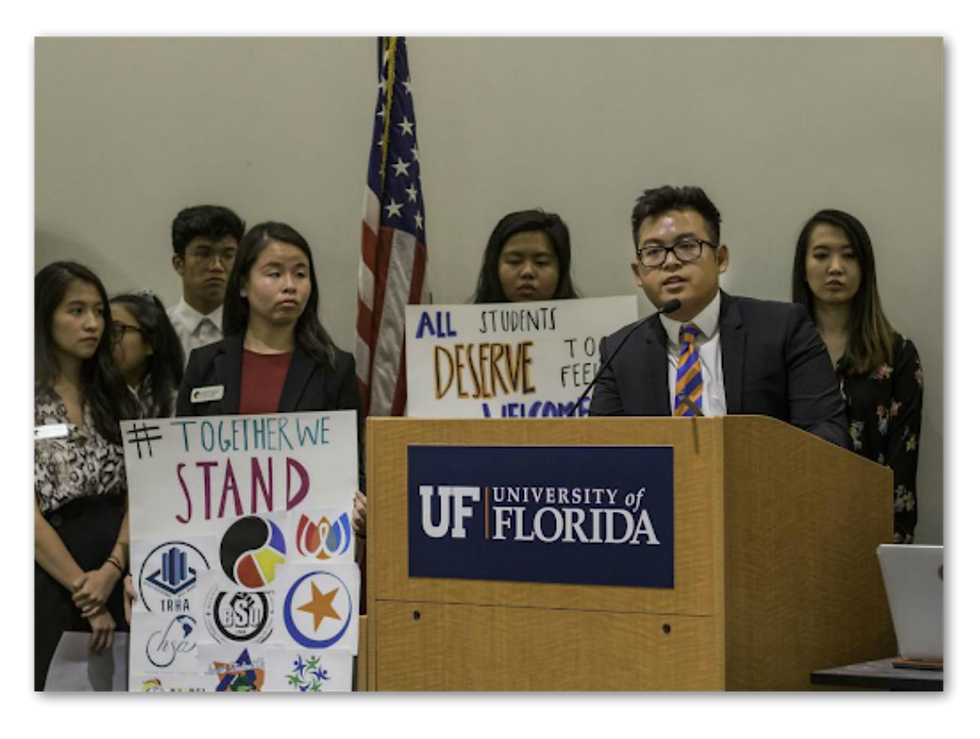
Student Government budget crisis cuts off funding to AASU
In 2019, a lawsuit settlement forced UF's Student Government to revise its finance codes and break apart its ties from the Big 9 organizations, including AASU. Organizations spoke out in public comment due to apathy from Student Government, and a 1,000-signature petition was signed.
Student Government budget crisis cuts off funding to AASU
In 2019, a lawsuit settlement forced UF's Student Government to revise its finance codes and break apart its ties from the Big 9 organizations, including AASU. Organizations spoke out in public comment due to apathy from Student Government, and a 1,000-signature petition was signed.
Student Government budget crisis cuts off funding to AASU
In 2019, a lawsuit settlement forced UF's Student Government to revise its finance codes and break apart its ties from the Big 9 organizations, including AASU. Organizations spoke out in public comment due to apathy from Student Government, and a 1,000-signature petition was signed.
2019
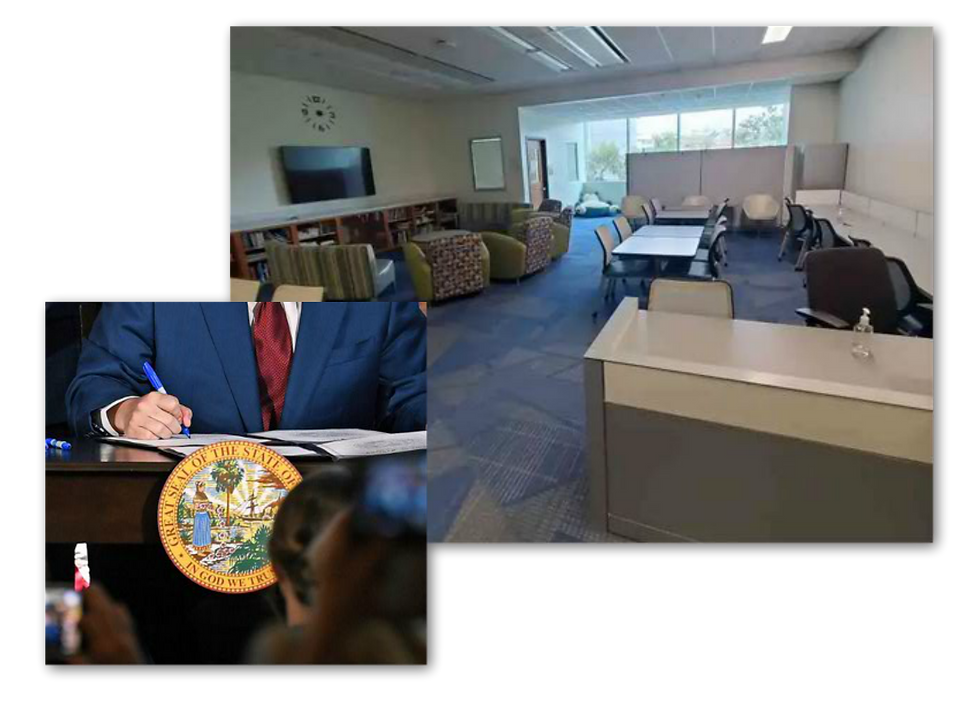
SB 266 closes the CIME and removes university funding for early arrival programs
After the 2023 passing of Florida's Senate Bill 266 which prohibited university DEI initiatives, UF closed the CIME in 2024. Cultural decorations, digital content, and items belonging to organizations like AASU were removed, and early arrival programs were defunded. The APIDSE no longer officially existed. In order for FiND and AASA (AASU's early arrival program and welcome assembly) to receive funding, the programs were integrated into the newly formed SG ROOTS Agency.
SB 266 closes the CIME and removes university funding for early arrival programs
After the 2023 passing of Florida's Senate Bill 266 which prohibited university DEI initiatives, UF closed the CIME in 2024. Cultural decorations, digital content, and items belonging to organizations like AASU were removed, and early arrival programs were defunded. The APIDSE no longer officially existed. In order for FiND and AASA (AASU's early arrival program and welcome assembly) to receive funding, the programs were integrated into the newly formed SG ROOTS Agency.
SB 266 closes the CIME and removes university funding for early arrival programs
After the 2023 passing of Florida's Senate Bill 266 which prohibited university DEI initiatives, UF closed the CIME in 2024. Cultural decorations, digital content, and items belonging to organizations like AASU were removed, and early arrival programs were defunded. The APIDSE no longer officially existed. In order for FiND and AASA (AASU's early arrival program and welcome assembly) to receive funding, the programs were integrated into the newly formed SG ROOTS Agency.
2024
HISTORY OF AASU
ALL SUBORGS, PROGRAMS, AND AFFILIATES

CASA


FSA

HEAL

KUSA

VSO

AKM

FLP

Sparks

ABSA

aKDPhi

BSA

CaribSA

Empress

ICSA

ISA

JSA

KPL

PDPsi

PSA

SASE

Surge

TLSA